Friday, December 4, 2015

Fifty Thousand Lumberjacks - The Pacific Northwest Strike of 1917.

Image result for images lumber strike 1917
I.W.W. Poster
         
           In late spring 1917 the Industrial Workers of the World struck the logging and milling industries of the Pacific Northwest for the 8-hour day, better pay and better camp conditions. It couldn't have come at a worse time for the U.S. government, in need of cedar and white pine to build ships, airplanes, barracks and boxes for the war effort.  By summer the strike had spread from Montana, across northern Idaho and into Washington State. In my novel, Marble Creek ( Please nominate it on Kindle Scout until July 3 for a possible eBook contract. And please share this post.  If  you vote for it and it gets a contract, you get a free download of Marble Creek from Kindle. https://kindlescout.amazon.com/p/1D4V6CAM4X7TA ) my protagonist, Wobbly and Irish radical, Malachi O'Neill, recently released from the Everett jail as a result of the Everett Massacre, heads for the Idaho woods to order loggers belonging to the I.W.W. to walk out.

Image result for vintage logging idaho images
Logging camp in Deer Park, north of Spokane, Washington
                                                                                                                    
             A few weeks later, O'Neill organizes a picket line at the MacLean Lumber Mill in St. Maries, Idaho, when Moses Alexander, Governor of Idaho, who has been making whistle stops at struck Idaho mills, arrives.


O'Neill knew how it would be.  Governor Moses Alexander in an expensive dark suit and hat would step down, followed by his entourage, some in uniform.  The mayor and town fathers, boot-lickers all, would be waiting at the station.  And Alonzo MacLean, the mill owner, would don a suit for the occasion, laying aside his high laced boots, tucked-in pants and plaid wool shirt.  The previous day he’d spotted MacLean though his open office door coming down with the “Wobbly Horrors” when he learned a few more men had struck and walked out.  When he saw the group rapidly approach along the dusty road, O’Neill called out, “Here comes the governor.  Ye’ll be givin’ him respect, fellow workers,” adding under his breath, “though they be at their old tricks.”
Governor Alexander went down the crooked picket line, offering his hand to each man, who had to pull his own out of a pocket to shake it. . .  .

. . . O’Neill stood back with fists in pockets.  Son-of-a-bitch rascal, thinking he’s squireen of us all.
Alexander spread the eagle’s wings and unsheathed its talons, speaking of patriotism and their duty to assist in defeating Germany.  He had his spiel down pat, having made the circuit of struck sawmills on Idaho's numerous rivers and lakes, knowing better than to trek into empty logging camps.
           He’d pushed a syndicalism law through the state legislature, directed at the Industrial Workers of the World.  Guts twisted with resentment, O'Neill watched the governor from below.  The strikers weren’t all Wobblies, just sympathetic to I.W.W. aims.  The new treason law, though, frightened the mill workers.  Unlike rough and tumble lumberjacks, they were mostly family men . . .   
  
         . . . The strikers had listened quietly, even respectfully.  Alexander stepped down and

 shook more hands.  And that was that.  He and his followers raise a cloud of fine dust on their way back to his train. . . .  The men in front of the gate were talking among themselves when Sheriff Buck Noland and his deputized thugs moved in to arrest the Wobbly leaders.  O’Neill didn't struggle, but it didn’t save him from being punched in the face after he was handcuffed.  The sheriff’s men held guns on the strikers as O’Neill and two others were dragged to one side and searched for weapons.  As they were close-herded the few blocks to the jail, O’Neill called out to a Wobbly, “Jimmy, ye best be gettin' us a lawyer.”


 And the appropriate I.W.W. song "Fifty Thousand Lumberjacks" can be heard  HERE

Thursday, December 3, 2015

The Everett Massacre - Nov. 5, 1916


The  S. S. Verona

November 5, 2016 will mark the 100th anniversary of the Everett Massacre. And yet, because it and its aftermath take up four chapters in the novel I recently completed, it feels like yesterday. To quote from the yet unpublished manuscript:


            "On a Sunday in early November, the passenger boat Verona slipped its bowline and chugged away from a Seattle pier, steaming north along Puget Sound’s coastal route, cutting through choppy waters beneath a wind-swept autumn sky, bound for Everett thirty miles away. 
            Coal smoke funneled around Jamieson, making him turn away and hold his breath, waiting for it to swirl off to cloak another section of the crowded open deck.  Two hundred and fifty Wobblies had taken passage for Everett.  Some sought cover below deck, but most pressed lean chest to muscular back around the pilot house, shifting in unison with the roll of the boat."

                Robert Jamieson, my protagonist, a Pinkerton detective, infiltrated the I.W.W. meetings in Seattle to observe what mischief, if any, the I.W.W. planned on this trip to Everett in support of the shingle workers' strike.
         A Wobbly tries to explain to his fellows on the boat a shingle mill worker's job.

A knee-bolter shingle saw
                                                                         
“You ever seen what them shingle weavers do ten hours a day?”  Waited for the shake of the head.  “There’s this upright saw, see, an’ it's slicing through a cedar block sixty times a minute.”  He brought his hand down, again and again.  “The shingle weaver, he grabs the shingle with his left hand and passes it to his right hand.  Now while he’s doing this, at the same time he’s gettin' another shingle off that saw with the left hand.  He’s trimmin’ up the last one with his right and throwin' it down a chute to the packer.  Sixty times a minute, both hands workin’.  Cedar dust so thick ya can’t hardly breathe.  Can't see, neither.”  Ended with, “Ya don’t wonder they’re strikin’ for the pay they deserve.” 
            The youngster flexed his fingers.  “They lose fingers and hands, don’t they.  You’ll never catch me workin’ there.  I’ll stick to pickin' apples up here and oranges in California.” 

                                                                                                         
Shingle Worker Who Lost Fingers

When the Verona steamed up to the Everett docks, the Wobblies were singing "Hold the Fort."
You can listen to it HERE for an idea of how it might have sounded (without instruments).

We meet today in freedom's cause
And raise our voices high;
We'll join our hands in union strong
To battle or to die.


Chorus:
Hold the fort for we are coming.
Union men, be strong!
Side by side we battle onward;
Victory will come.


               Sheriff McRae wrestled his gun belt around to reveal the holstered gun, stepped forward and raised a beefy arm to halt the singing.  Men behind him brandished their weapons, noonday light glinting off steel barrels.  Suddenly savvy, Wobblies nearest the wharf broke off the song; singing dwindled behind them as at the end of a child’s round.
            Jamieson caught only McRae’s last word, “leader.”  An answering bellow came from a Wobbly nearest the sheriff.  “We’re all leaders!”
            McRae jerked out his gun and leveled it at the boat.  “You can’t land here!” 
            While men jostled toward the partially lowered gangplank, another Wobbly yelled 

back, “The hell we can’t!”  

        
          Sheriff McCrae had deputized and armed about 200 men, placed behind him on the docks and over to the side.  A barrage of gunfire opened from the docks. When it was over, five Wobblies had been killed; others trying to escape fell overboard and drowned.  Two deputies were killed by their own comrades. When the Verona returned to Seattle, the Wobblies were arrested as they disembarked. 75 were charged with murder some days later. One, Thomas Tracy, was put on trial in Seattle the following spring and found not guilty in May. Charges were dropped against the rest, including my protagonist, Malachi O'Neill.  You can read Wikipedia's account  HERE

Death Masks of the five known Wobbles killed.

Wednesday, December 2, 2015

Hallelujah, I'm a Bum


WANTED! Men to fill the Jails of Spokane!
Please nominate Marble Creek on Kindle Scout until July 3. If it receives a Kindle Press eBook contract, you will get a free download of Marble Creek from Kindle  https://kindlescout.amazon.com/p/1D4V6CAM4X7TA


When I was a small child, Mom and I would cuddle in her rocking chair on the wood dining room floor, singing and rocking so hard it moved across the floor. One evening we even went over backwards. One of our favorite songs was "Hallelujah, I'm a Bum."   It wasn't until I was doing research for Marble Creek, that I learned the song was adopted as their official song by the Industrial Workers of the World - the Wobblies - during their fight for free speech in Spokane during 1909.  A 1928 version  of the song is on YouTube  HERE. 
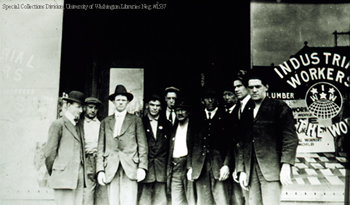
Wobblies in front of Spokane I.W.W. Hall


Thursday, November 12, 2015

Jay's Take on Northern Ireland: My Own Private Idaho: The Past is Never Dead

My Own Private Idaho: The Past is Never Dead: Yesterday, a former British soldier was arrested in Northern Ireland and charged with murder during the Bloody Sunday shooting of Catholic m...

Tuesday, November 3, 2015

Temple House, County Sligo, Ireland


Temple House, County Sligo - original entrance

 Temple House, in County Sligo, Ireland, is operated as a guest house by Roderick Perceval, descendant of the family line of owners dating back to the 1660s. I wanted to explore such a house, and so we stayed here for two nights.

Present front entrance

 All its furnishing date back to the 1850s when it was enlarged. Our room originally belonged to two sisters; dressing tables, wash stands and other furnishings are duplicated. The mattresses are more recent and very comfortable.


The Perceval sisters, Jean and I can't recall the other sister's name - Agnes, I think. They married Lavin brothers.


On the grounds is a late 13th century Knights Templar castle. This Knights Templar castle lies the farthest west in Europe. The Knights Templar were dissolved by the pope in the early 1300s, their lands confiscated and given to the Knights Hospitaller. Politics!

But back to Temple House.


                     I wish our stairs were as easy to mount as these are - wide and low. Ascending and descending pure pleasure and rather regal.


                                             The house is filled with portraits of Anglo-Irish ancestors.

Malcolm Blaine, killed in action 1914. A great-uncle.


The house is a 19th century time capsule; stuffed animals and birds are everywhere. I was especially taken with this case of taxidermy frogs in the hall outside our bedroom.


But Temple House, grand as it is, still has a sense of humor.


Roderick is a fine hotelier, and chef, serving wonderful suppers and fine breakfasts at one large table.  Despite being dressed in jeans and sweaters, you feel you're at a grand dinner party of old. He arranges the 12 guests as a proper host should, so that conversation is lively and friendly. I especially enjoyed his Irish porridge with apple syrup in the morning. Stay at Temple House for a taste of Anglo-Irish life. Roderick and his wife also raise curious sheep.